Australia's media regulator has set out, for the first time, how it will read the new ban on sports stars, celebrities and influencers in gambling advertising — and the answer is: broadly. With the rules switching on in less than three months, operators, broadcasters and publishers now have a clearer picture of what they must change.
Key takeaways
- From 1 January 2027, no gambling ad in Australia — broadcast or online — may feature a "notable person".
- The definition covers current and former athletes, celebrities, influencers and prominent individuals.
- ACMA calls the definition deliberately broad; compliance responsibility sits with the licensed operator.
- The ban is part of a wider reform package that also restricts ads during live sport and inducements to at-risk customers.
The Australian Communications and Media Authority (ACMA) has released initial industry guidance on the "notable persons" provision of the country's reworked gambling advertising regime. The document arrives with the commencement date already locked in, leaving the industry a narrow window to audit its marketing.
From 1 January 2027, gambling advertising will not be allowed to feature a notable person, regardless of whether it is broadcast or delivered online. On the same date, licensed interactive wagering providers will also lose the ability to sign contracts or arrangements under which a notable person sponsors, participates in or is otherwise involved with promoting wagering advertising in Australia.
The prohibition is platform-neutral: it reaches free-to-air television, radio, news websites, online games and social media alike.
Who falls under the definition?
The legislation defines a notable person as a current or former professional sports player or athlete, celebrity, social media influencer or prominent individual. The minister also has the power to add further classes of people by determination.
The inclusion of former figures is significant. Retired sporting greats and one-time influencers — long a fixture of Australian wagering campaigns — are squarely inside the ban.
ACMA's guidance walks through how the definition should be applied, with examples of people likely to be caught and others who may sit outside it. It also outlines the factors the regulator may weigh when investigating suspected breaches, and how the provision on causing or authorising gambling ads will operate in practice — a point that pulls affiliates, agencies and media partners into the compliance picture alongside operators. Exceptions, including those for dedicated racing services, channels and programmes, are also covered.
The regulator has signalled it could follow up with formal guidance on the provision later if needed.
Industry concerns left unanswered
The definition drew fire during the Senate inquiry into the bill. At a hearing on 4 August 2026, Senator Sarah Hanson-Young clashed with ACMA over the provision, while Sportsbet cautioned that the draft wording could ensnare practically anyone with a social media following.
"Anyone with an Instagram account" could be caught by the draft definition.
— Sportsbet, Senate inquiry hearing, August 2026
Sportsbet, TAB and Responsible Wagering Australia nonetheless told the inquiry they backed the government's package overall, while warning that a step further — a total advertising ban — would push punters towards illegal offshore sites.
ACMA has not narrowed the scope in response. According to a 19 October report by ASGAM, the 11-page guidance describes the definition as intentionally wide, built to capture anyone a wagering brand might use to encourage betting through association. Liability rests with the licensed operator rather than the notable person, and because someone's profile can change over time, operators may need to pull an ad if a person appearing in it later becomes notable.
An early test: AI-generated players
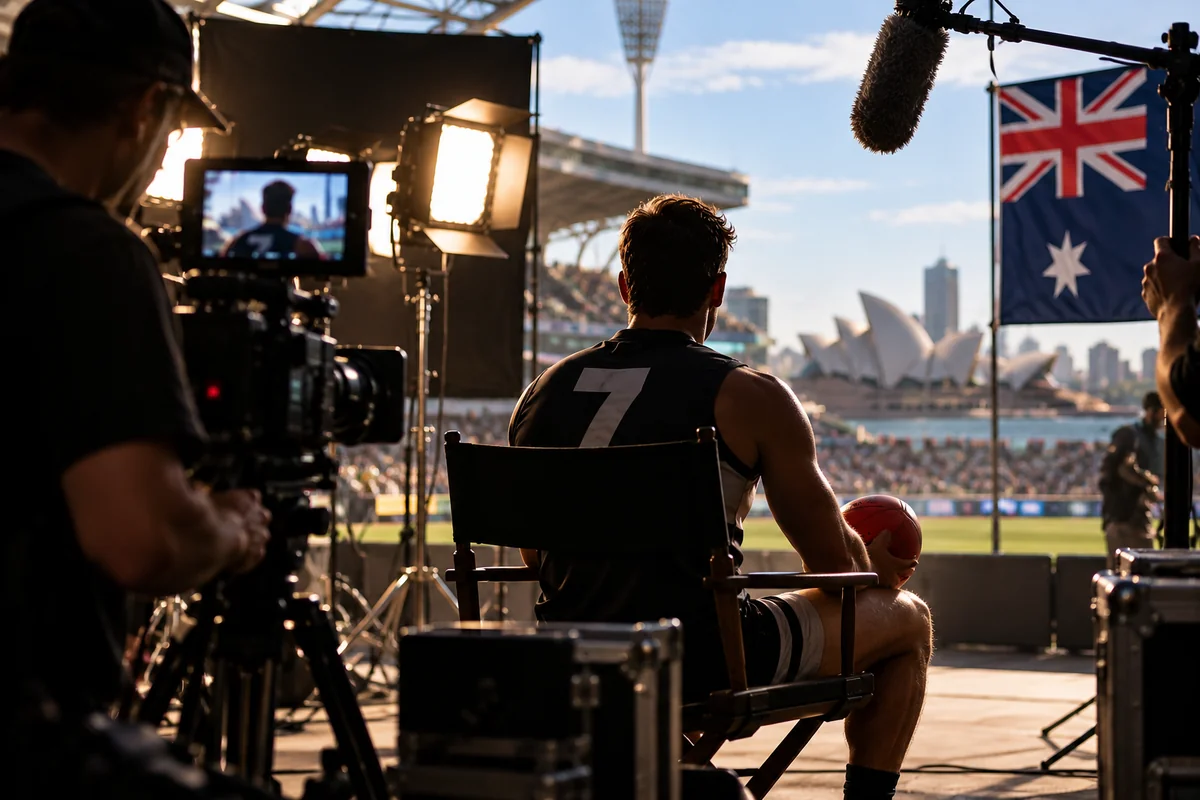
The guidance arrives days after a case that shows how quickly the boundaries are being tested. In mid-October the AFL told its official wagering partner, Sportsbet, to stop featuring players in AI-generated social media content without their permission. The age-restricted videos had manipulated the images of stars such as Collingwood's Lachie Neale and Brisbane's Will Ashcroft to have them deliver lines from films, TV shows and speeches in reaction to real events. Sportsbet removed the videos after Guardian Australia contacted it.
The complaint came from the AFL Players' Association, which argued the content breached the players' collective bargaining agreement on image use. But the episode also raises a question the new law will have to answer: whether a synthetic depiction of a notable person counts as "featuring" them in a gambling ad. ACMA's deliberately broad reading of the definition suggests operators should not count on a loophole.
How Australia got here
The reforms are the government's response to a 2023 parliamentary inquiry chaired by the late Labor MP Peta Murphy, which made 31 recommendations — including a phased, comprehensive ban on online gambling advertising over three years. The government stopped short of a total ban, opting instead for targeted restrictions such as the notable persons rule and limits around live sport. That choice has been criticised by reform advocates as too weak and by parts of the industry as too strict, which helps explain why the details of each provision are now being scrutinised so closely.
One piece of a larger overhaul
The notable persons rule sits within the Interactive Gambling Amendment (Gambling Reform) Bill 2026, which cleared parliament on 19 August 2026. The law also tightens wagering advertising more generally — including a ban during live sport and inside sports venues — prohibits direct marketing of inducements to at-risk customers, steps up enforcement against illegal gambling services, strengthens BetStop, the national self-exclusion register, and targets harmful and emerging online lottery products.
Every measure takes effect on 1 January 2027, with ACMA responsible for monitoring, enforcement and industry guidance.
Two companion levy bills passed the same day — the National Self-Exclusion Register (Cost Recovery Levy) Bill 2026 and the Interactive Gambling (Cost Recovery Levy) Bill 2026. Together they let the government recoup from wagering companies the costs of promoting BetStop, policing the new inducement restrictions and building a wagering advertising opt-out register.
What it means
- For wagering operators: ambassador deals with current and retired athletes need to be unwound or restructured before 1 January, and future campaigns need a process to check whether anyone featured has become "notable".
- For agencies, affiliates and media partners: the "causing or authorising" provision means they share the compliance risk and cannot simply rely on the operator's sign-off.
- For athletes and influencers: a long-standing source of sponsorship income in Australian sport largely disappears.
What happens next
With the start date fixed, the focus shifts to compliance. Brands that have leaned on sporting ambassadors and influencer partnerships will need to review existing contracts and creative assets well before the new year — and keep reviewing them, given that today's unknown could be tomorrow's notable person.