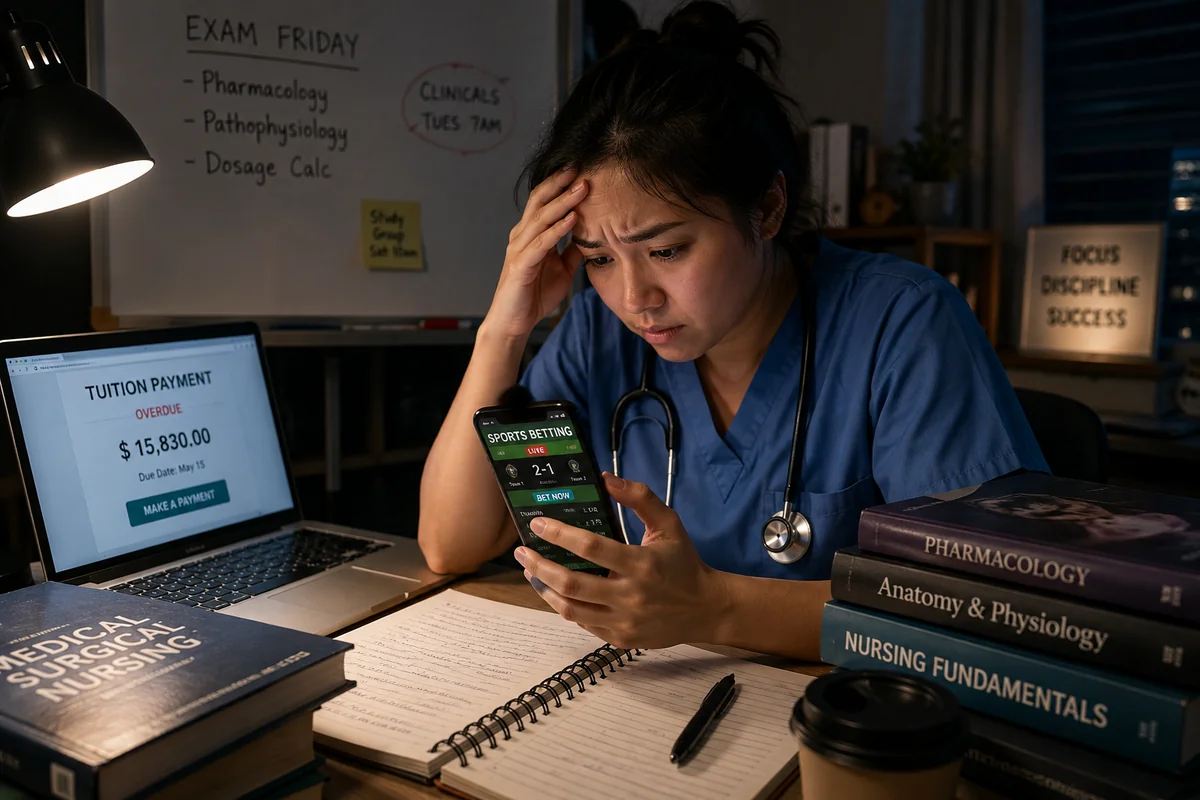
A growing share of U.S. healthcare students are turning to sportsbooks, prediction markets, and other unconventional income streams to help pay for their education, according to fresh survey data from workforce infrastructure firm Clasp — with two-thirds of student bettors counting their winnings as real or potential tuition money.
Key takeaways
- More than 1 in 4 healthcare students (27%) have used a betting or prediction market platform.
- 67% of student bettors treat winnings as school money — 24% build them into their tuition plan.
- 73% of student bettors wager multiple times a week; 15% do so daily — far above national youth rates.
- DraftKings (50%), FanDuel (42%) and Polymarket (31%) lead among student users.
- Nearly 30% say they cannot consistently cover a single month of basic expenses.
- From July 1, 2026, new federal Grad PLUS loans ended and graduate borrowing caps of $20,500 (or $50,000 for professional degrees) a year took over.
The findings draw on responses from 1,000 healthcare students surveyed between June 16 and June 28, 2026. They point to a picture in which conventional financial aid and borrowing are leaving many would-be clinicians hunting for extra ways to fund their studies. Respondents came from nursing, allied health, and other healthcare programs; 81% identified as women and 84% were under the age of 36.
The poll was run through survey platform Pollfish and forms the first edition of what Clasp calls its State of Healthcare Student Finances report, published on July 21. It did not identify which schools respondents attend. Casino.org describes Clasp as a loan-based hiring platform serving a range of healthcare fields.
The report lands just as changes to federal student borrowing rules take effect. Those limits, in force from July 1, 2026, could open significant funding gaps for some programs, Clasp said, piling further pressure on students already stretched by tuition and living costs.
What changed for graduate borrowers
The new rules come from the tax and spending package known as the One Big Beautiful Bill Act, which President Donald Trump signed on July 4, 2025. For loans taken out on or after July 1, 2026, it ended new Federal Direct Graduate PLUS lending, the program created in 2006 to let graduate students borrow above the standard federal cap.
Students in non-professional graduate programs can now borrow up to $20,500 a year in federal direct loans, with a lifetime ceiling of $100,000. Those on professional-degree tracks, such as medicine, may borrow up to $50,000 a year and $200,000 in total. Borrowers already enrolled are shielded from the new annual limits for up to three academic years if they stay at least half-time in the same program and school. The scale of what disappears is considerable: in the 2024-25 academic year Grad PLUS lent $15.51 billion to 454,000 borrowers, more than a fifth of US graduate students, according to Citizens Against Government Waste, a group that supports the changes.
More than a quarter of those surveyed said they have used sports betting or prediction market platforms, and many indicated that any money earned there feeds into how they intend to pay for school.
"The survey finds that more than 1 in 4 (27%) have used a betting or prediction market platform. Two-thirds of student bettors (67%) treat winnings as real or potential school money: 24% say winnings are part of their plan to pay for school, and another 43% say it could help."
— Clasp survey report
Students reach for alternative sources of cash
The research suggests the trend runs well beyond betting. More than half of respondents said they lean on income streams that rarely show up in traditional financial aid calculations.
Clasp found that 56% of surveyed students draw on alternatives such as credit cards, content creation, or other side income to cover tuition or everyday expenses. Platforms named in the report included TikTok, YouTube, OnlyFans, and Substack as common sources of supplemental earnings.
Some 21% said they take part in paid content creation. The survey also found that 6% had sold feet pictures or similar content online, while 10% had weighed egg or sperm donation as a potential way to raise money. Clasp framed these activities as part of a broader financial reality: nearly 30% of respondents said they cannot reliably cover a month of basic expenses.
The company added that many students remain unaware of the recent borrowing policy changes — even as they voiced strong determination to finish their healthcare training despite the financial strain.
Betting activity outpaces national trends
Healthcare students appear to engage with betting platforms at rates well above those usually reported for young adults. According to Clasp, 73% of healthcare students who use sportsbooks or prediction markets log on several times a week, and 15% do so every day. For comparison, the report cited broader figures for 18-to-22-year-olds of just 14% multiple times a week and 4% daily.
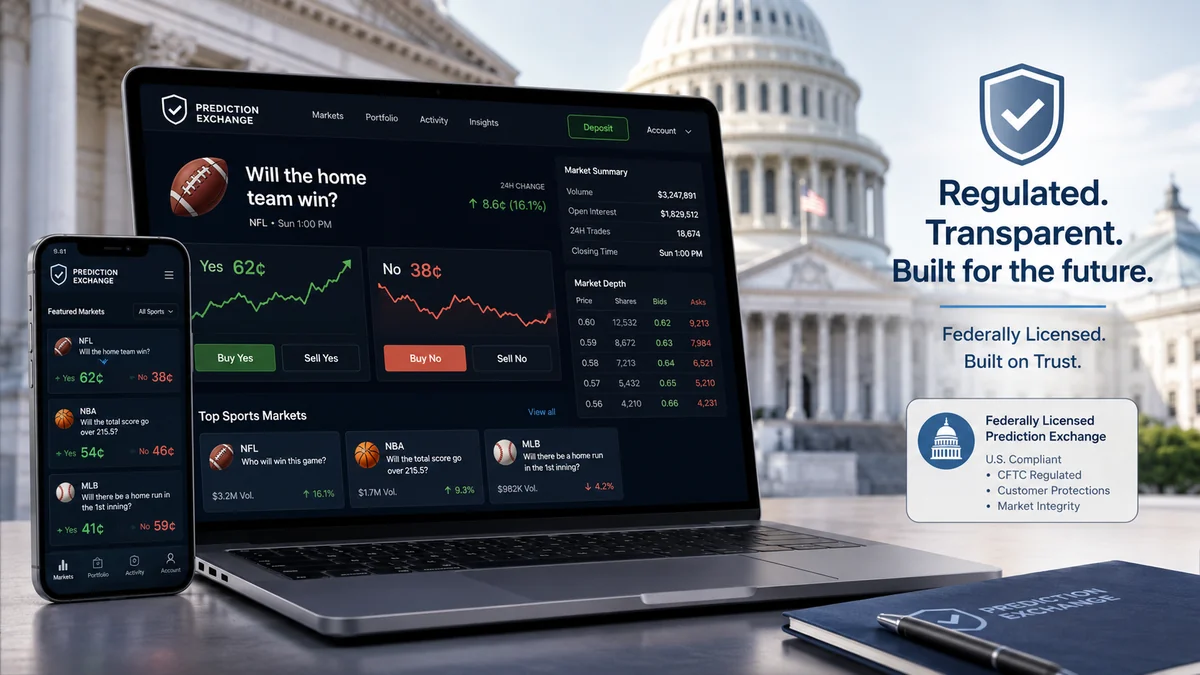
Several major platforms featured heavily. Half of student bettors reported using DraftKings, 42% said they had wagered through FanDuel, and roughly a third (31%) had traded event contracts on Polymarket. Prediction market operator Kalshi also drew notable use among students chasing extra income.
Kalshi became the first regulated venue for trading directly on event outcomes when the Commodity Futures Trading Commission registered it as a designated contract market in November 2020, and it opened to the public in July 2021. Sports have since come to make up the great bulk of activity on the platform. In 2025 the company dropped plans for a campus "student ambassadors" scheme after a backlash, and critics have noted that treating event contracts as commodity products rather than bets effectively brings the minimum age down from 21 to 18.
The results were far from a windfall, however. Only 40% of student bettors said they were ahead overall, while about half reported essentially breaking even.
"The most common amount won or lost is $100 to $1,000, and 1 in 10 report amounts over $5,000. Two respondents reported wins or losses above $50,000."
— Clasp survey report
Fourteen respondents said they had gained more than $5,000, while two others reported losses of a similar scale.
Kalshi has also been fighting the states. In January 2026 a Massachusetts Superior Court judge granted a preliminary injunction against its sports contracts there; in March Michigan's attorney general sued the company together with the state gaming regulator, and Arizona prosecutors filed criminal charges the same month. In May a federal judge permanently blocked the Arizona case, finding that federal law pre-empts the state's rules because Kalshi falls under the CFTC's exclusive oversight.
Women are stepping into prediction markets
Betting remains more common among male students, but the report flagged meaningful participation among women pursuing healthcare careers. Nearly half of male respondents said they use betting or prediction market platforms, compared with about one in five female respondents — a figure Clasp noted is roughly double the national rate of sports betting among women.
Given how heavily female healthcare education programs skew, the company said the numbers push back on the assumption that betting stays concentrated among men.
Clasp Chief Executive Officer Tess Michaels said financial pressure looks like the main force pushing students toward these platforms.
"These students aren't betting for fun. They're budgeting winnings into their tuition plans, and most of them are barely breaking even."
— Tess Michaels, CEO, Clasp
Michaels also pointed to the intense time demands of healthcare training as a factor shaping student choices. "Time is really precious in healthcare, and there are different jobs that you can do to try and earn extra cash," she said. "And so the fastest routes to being able to get access to cash are probably going to win."