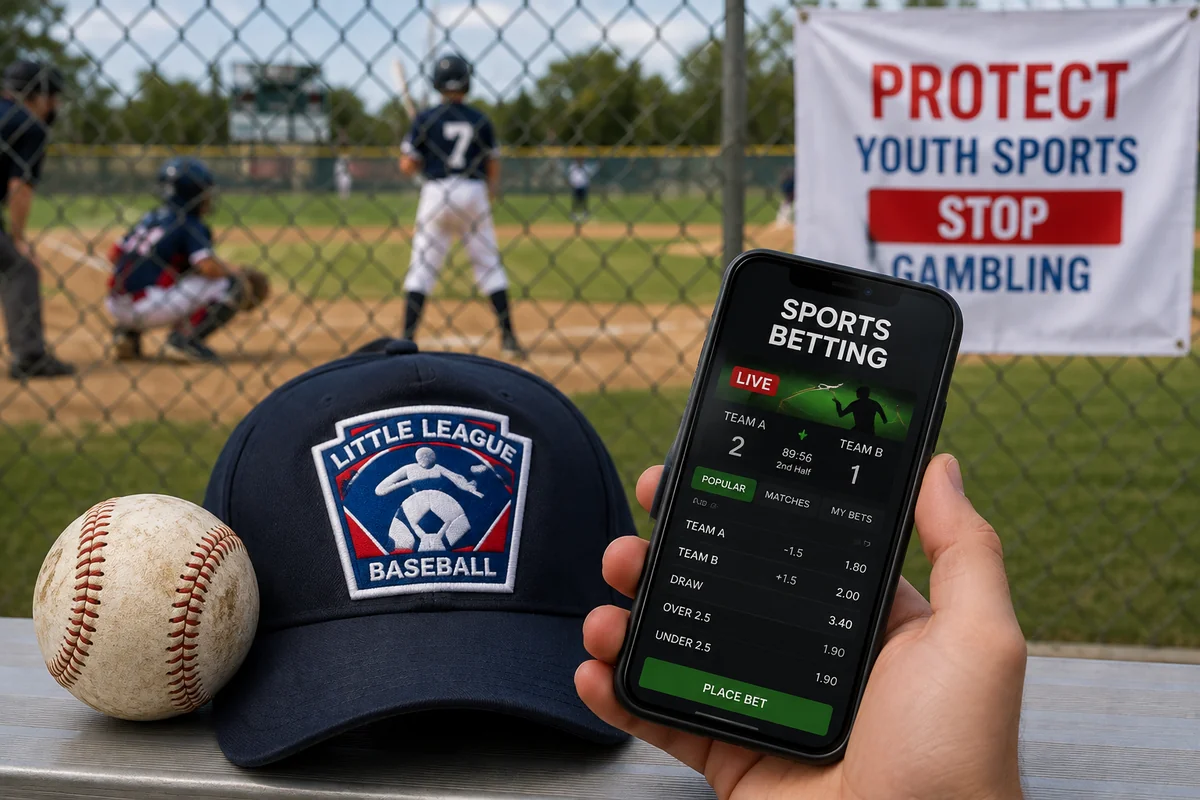
Word that adults have been wagering on Little League World Series games has reached Capitol Hill. Rep. Kevin Kiley says he intends to examine how children's competitions ended up as betting markets — and the trail appears to lead offshore.
Key takeaways
- Rep. Kevin Kiley plans to look into betting activity on Little League World Series games.
- Little League International and the American Gaming Association both note that licensed US sportsbooks do not take youth sports bets.
- The wagering is believed to originate on offshore and other unregulated platforms.
- Underage access and the absence of offshore safeguards are central concerns; no hearing date is set.
- An offshore brand, BetOnline, publicly promoted its Little League odds and said bettors staked twice as much on the event in 2025 as in 2024.
Reports of grown adults placing money on Little League World Series matchups have landed in front of members of Congress, and at least one House lawmaker is signalling that federal scrutiny of how youth competitions became gambling products may follow.
A Subcommittee Chairman Takes Notice
Rep. Kevin Kiley, who chairs the House Subcommittee on Early Childhood, Elementary and Secondary Education, said he intends to dig into the issue after hearing that offshore betting sites were handling significant volume on Little League games. The reports — surfaced by USA Today — have stoked worry about gambling creeping into events played by children.
Kiley, a Californian who has sat in the House since January 2023 after six years in the California State Assembly, and who is now listed by USA Today as an independent, gave his reaction in a phone interview with the paper's sports desk. Reporters had shown him claims from an offshore sportsbook's brand manager that more of its customers were backing a Little League game between South Korea and Canada than some Major League Baseball fixtures.
"I think this is deeply troubling and perhaps it's something that does merit further action by our committee."
— Rep. Kevin Kiley, Chair, House Subcommittee on Early Childhood, Elementary and Secondary Education
This year's tournament runs from 19 to 30 August in South Williamsport, Pennsylvania, drawing young ballplayers from across the United States and abroad. It has always been positioned as a showcase for youth sport, not a commercial wagering property.
The 2026 edition is the 79th since the event was first staged in 1947. Twenty teams of players aged 10 to 12 take part, split evenly between a United States bracket and an international bracket, with games played at Howard J. Lamade Stadium and Volunteer Stadium at Little League's headquarters complex and broadcast nationally on ESPN.
For the second year running, Little League International has come out against betting on its games, arguing that gambling has no business in youth sport and that children's performances should not become a revenue stream for adults.
"Little League International stands by its statement first issued last year that there is no place for betting on Little League games and players or any youth sports competition."
— Little League International, 2026 statement
How the Markets Came to Light
The latest round of attention was triggered by an offshore operator that made no secret of its Little League book. BetOnline brand manager Dave Mason said in a press release that the site expected to take more bets on the tournament over its two weeks than on the WNBA, Major League Soccer, professional tennis or golf, adding that bettors had staked twice as much in 2025 as in 2024.
"We offer Little League World Series odds because there's a massive demand for it."
— Dave Mason, Brand Manager, BetOnline
Gambling industry newsletter writers Dustin Gouker and Eric Ramsey flagged the markets over the weekend before the opening games, observing that discovery of offshore Little League odds, and the outrage that follows, has become an annual summer ritual. TechCrunch reported that federally regulated prediction markets Kalshi and Polymarket are not listing the tournament this year, although Polymarket did offer Little League contracts in 2024.
Regulated Books Are Not the Source
The American Gaming Association has been keen to separate its members from the activity in question. Licensed US sportsbooks, the trade body points out, simply do not offer markets on youth competitions.
"No licensed sportsbooks offer bets on youth sports. If a bet is placed on the Little League World Series, it is through an illegal sportsbook or 'prediction market' preying on consumers and exploiting youth sports."
— American Gaming Association, statement to USA Today Sports
That leaves offshore sites and other unregulated platforms as the likely origin of Little League action — venues that sit entirely outside the oversight state gaming regulators impose on licensed operators.
The scale of that grey and black market is the AGA's long-running complaint. A 2025 release from the association put the amount Americans stake each year with illegal and unregulated gambling operators at $673.6 billion. The trade body says it keeps lobbying law enforcement to go after offshore sites, and its guidance to state regulators suggests they call out non-compliant offshore brands publicly and send them cease-and-desist orders. In August 2025, attorneys general from all 50 states also signed a joint letter calling for action against illegal offshore gaming.
A Broader Argument About Youth Sport
Kiley frames the betting story as one strand of a bigger shift. His subcommittee has already held hearings on the growing presence of private equity in youth athletics and the mounting costs families face. Wagering on children's games, in his reading, is another indicator that youth sport is drifting away from its community roots.
Those sessions took place in December and July. Separately, Democrats introduced the Let Kids Play Act in May, aimed at practices such as forcing families to book specific hotels for tournaments; that bill has not passed.
He has floated the idea of a future hearing that would bring the relevant organisations — the AGA included — to the table to discuss how betting on youth events might be curbed. Kiley acknowledged that offshore operators create thorny legal and jurisdictional problems, but argued Congress has standing to act given the Little League World Series' status as a major American institution.
"I think that we would want to hear from anyone who has enabled this and anyone who has the capacity to stop it."
— Rep. Kevin Kiley
Underage Access Adds to the Concern
Running alongside the youth sports question is the perennial issue of minors reaching betting products. Legal US sportsbooks are obliged to verify customer age, and regulators still contend with attempts by under-18s to slip through. Offshore sites offer no equivalent protections, widening the exposure for young people and their families.
In most states the legal gambling age is either 18 or 21, and USA Today reported in February that licensed operators such as DraftKings and FanDuel catch thousands of underage customers trying to place bets every year. Kiley argued that because these platforms operate across state lines and touch interstate commerce, Congress has a measure of jurisdiction, even as individual states develop their own approaches to keeping minors out.
No date has been fixed for a hearing. Kiley said his committee intends to review the matter and determine whether lawmakers can find workable ways to restrict wagering on youth competitions and strengthen safeguards for minors.