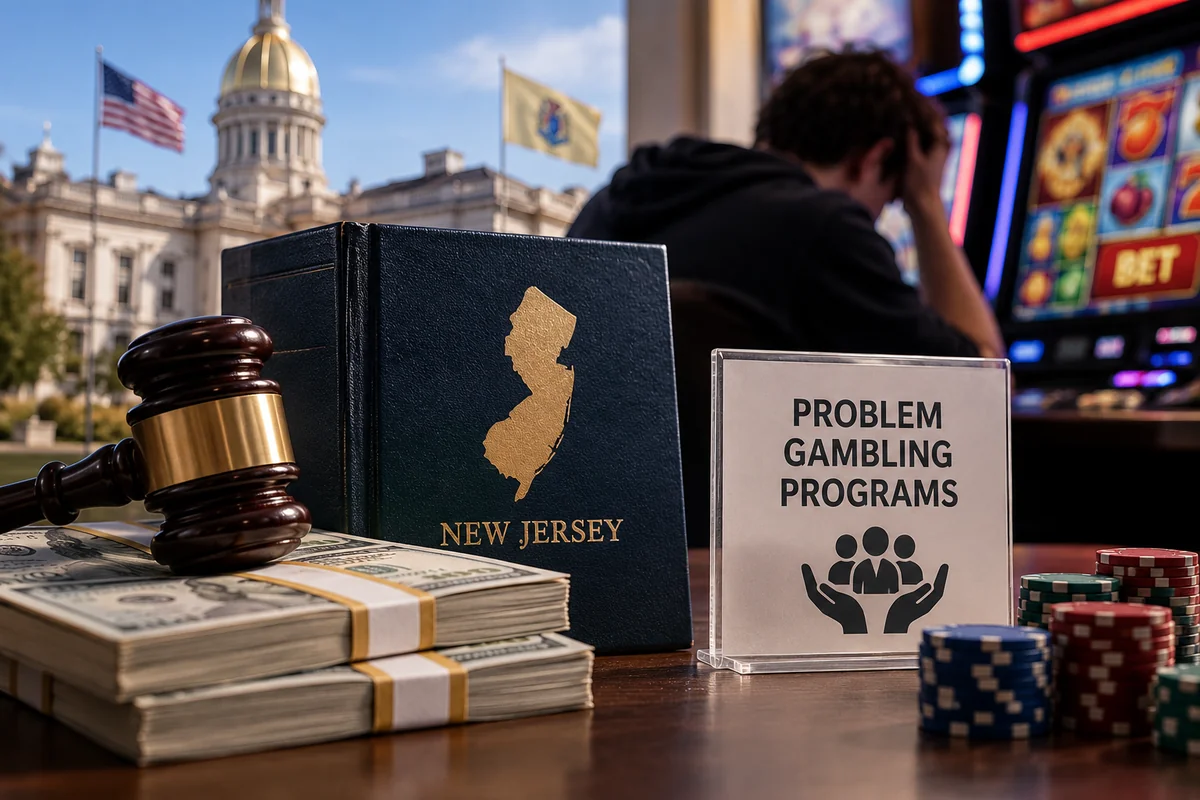
New Jersey lawmakers want to stop giving young people criminal records for gambling in casinos — and make the fines pay for problem-gambling help instead. Bill S597 passed its first Senate committee unanimously, but the state's leading problem-gambling charity says it still needs work.
Key takeaways
- The Senate Judiciary Committee advanced S597 11-0 on 15 October 2026.
- Underage casino gambling would become a civil offence: fines of up to $500, $1,000 and $2,000 for first, second and third violations.
- Fines would also reach guardians who let minors gamble and casino licensees or staff who allow it.
- All fine revenue would go to compulsive gambling prevention, education and treatment.
- The legal gambling age stays at 21.
New Jersey would stop treating underage casino gambling as a criminal matter under S597, a bipartisan bill that cleared the Senate Judiciary Committee without a single vote against it. Instead of a disorderly persons charge, young people caught gambling at a casino or simulcasting facility would face an escalating civil fine — and the money collected would be ring-fenced for problem-gambling services such as those run by the Council on Compulsive Gambling of New Jersey.
What would change
The bill rewrites the penalty section of the Casino Control Act. Here is how the current rules compare with what S597 proposes:
| Current law | Under S597 | |
|---|---|---|
| Type of offence | Disorderly persons offence (criminal) | Civil offence |
| Penalty | $500–$1,000 fine and up to six months in jail | Up to $500 (1st), $1,000 (2nd), $2,000 (3rd+) |
| Criminal record | Yes | No |
| Where the money goes | Not earmarked for problem-gambling services | Prevention, education and treatment programmes via the Department of Human Services |
The fines would not only target the young gambler. A parent or guardian who lets someone under 21 in their care gamble, and a casino licensee or employee who permits it, would fall under the same penalty structure. Under current law, under-18s are dealt with through the state's juvenile system.
Why 21 matters
New Jersey sets different minimum ages for different forms of gambling, which is part of why underage casino cases come up at all. Young adults who can legally buy a lottery ticket can still be turned away at a casino floor or a sportsbook counter:
| Product | Minimum age in New Jersey |
|---|---|
| Lottery | 18 |
| Casino gaming (land-based and online) | 21 |
| Sports betting | 21 |
S597 does not change any of these thresholds. It changes only what happens after someone under 21 is caught gambling at a casino or simulcasting facility.
Why the sponsors want it
The bill is backed by senators from both parties. Sen. James Beach (D-Camden, Burlington) argues that a conviction does more harm than good for a young person who made one bad decision.
"Our efforts are better spent focusing on behavioral changes that may prevent future addiction."
— Sen. James Beach, bill sponsor
The practical difference is significant. A disorderly persons conviction is a criminal record in New Jersey, and even a minor one can surface in background checks run by employers, universities, landlords and licensing bodies. It can be expunged, but only after a waiting period and a legal process that many young people never complete. A civil fine, by contrast, is paid and closed without following the person into later applications — which is precisely the outcome both sponsors say they want.
Co-sponsor Sen. Vince Polistina (R-Atlantic), whose district includes Atlantic City, pointed to how present betting has become in young people's lives — from sports broadcasts and TV commercials to a steady flow of online betting ads. In his view, the law should still hold people accountable, but a criminal charge is "an unnecessarily harsh consequence for a kid who makes a mistake".
The problem-gambling council's reservations
The organisation that would benefit most from the money is not fully on board. According to NJ Gaming Review, the Council on Compulsive Gambling of New Jersey supports the bill only conditionally. Its main concern: a fine alone does not require the young person to take part in any problem-gambling education. The council has asked for two changes to the bill's wording and said demand for its treatment services had already outrun its budget over the past year.
The council's own research explains the urgency. A 2023 study it ran with Seton Hall University's Stillman School of Business found that nearly eight in ten New Jersey online gamblers aged 16 to 25 had started betting before turning 21, and nearly four in ten began between the ages of 15 and 18. Calls to the council's 1-800-GAMBLER helpline have risen 277% since 2018, with a clear shift towards younger callers.
What it means for casinos and players
- Casinos: age checks remain just as important. Licensees and employees who let under-21s gamble would face their own escalating fines, on top of any action by state regulators.
- Young people: getting caught would still cost money — up to $2,000 for repeat cases — but would no longer leave a criminal record.
- Families: adults who let a young person in their care gamble would be liable too.
What happens next
This is the second attempt: a near-identical bill received preliminary approval last year but never became law. S597 now moves to the Senate Budget and Appropriations Committee. To be enacted, it must still clear committees in both the Senate and the Assembly, pass full votes in both chambers and be signed by the governor.
The bill is one of several gambling measures in front of New Jersey lawmakers this autumn, alongside proposals targeting microbetting and gambling advertising aimed at vulnerable bettors.
Taken together, they show a state tightening its approach to consumer protection after more than a decade as one of America's most permissive online gambling markets:
- Sweepstakes casinos: New Jersey enacted a ban on online sweepstakes casinos in August, with steep penalties for operators.
- Microbetting: lawmakers moved in July to ban in-play bets on individual moments within a game, such as the next pitch or play.
- Advertising: a legislative committee in September urged curbs on gambling ads aimed at vulnerable bettors.
- College athletes: a proposed ban on prop bets involving individual college athletes was revived in October.
Against that backdrop, S597 stands out for moving in a softer direction on penalties for individuals, while still increasing accountability for casinos and channelling money into prevention.
Sources: Yogonet · NJ Gaming Review · New Jersey Senate Democrats