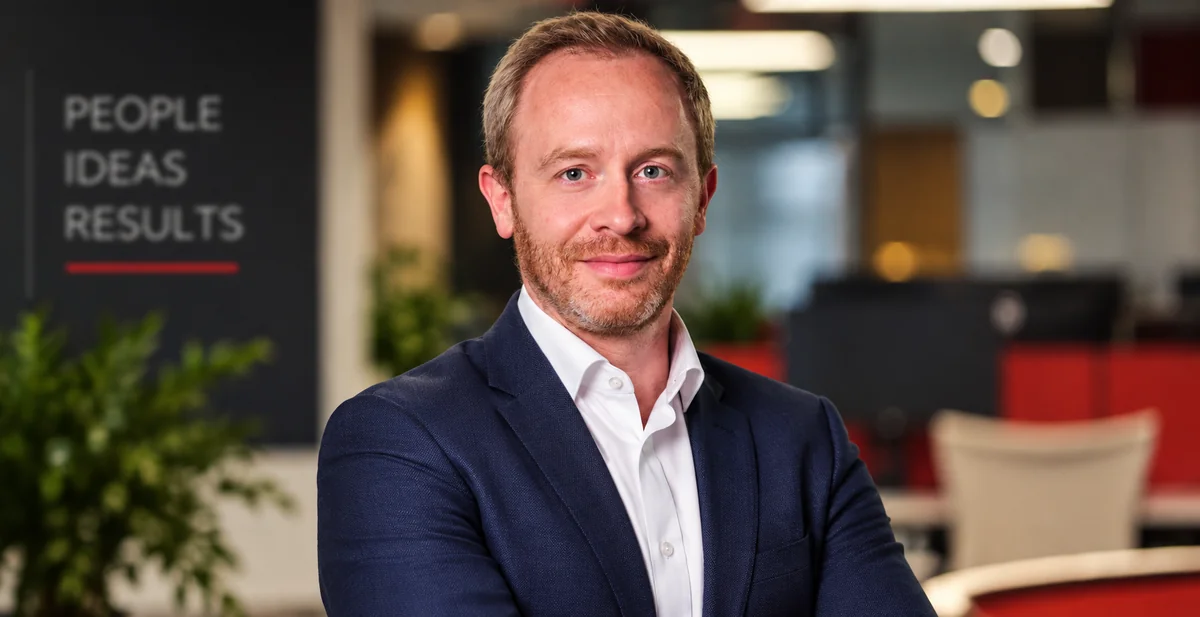
Super Technologies, the group behind Superbet, has turned a Romanian retail bookmaker into one of the most recognisable betting brands in Central and Eastern Europe and a serious challenger in Brazil. Deputy Chief Executive Albert Simsensohn says the strategy behind that run is narrower than most people assume — and deliberately so.
Key takeaways
- Super builds and maintains its own platform across engineering teams in the UK, Spain, Romania, Croatia and the Netherlands
- The group only enters markets where it sees a realistic path to a top-three position — fewer markets, full commitment
- Brazil was chosen because the same rivals and the same product travel there, with a federally regulated market live since January 2025
- Maxbet joins Napoleon to deepen Super's casino and gaming offer in Romania, a market Simsensohn calls one of Europe's most demanding
- Simsensohn wants licensed operators to take a common position on the illegal online market, which he says regulators cannot fix alone
From a Romanian Betting Shop to a Global Operator
Super began life in 2008 as a retail betting business in Romania and spent its early years fighting for share at home. Once it had established itself as the market leader in what Simsensohn describes as one of Europe's toughest regulated environments, international expansion stopped being an aspiration and became a plan.
Today the Superbet sportsbook is a heavyweight across the CEE region and one of the largest international operators in Brazil by traffic, downloads and volume. Simsensohn — a SBC Summit Lisbon speaker who arrived at Super after senior roles at Meta, OLX Group, eBay and McKinsey & Company — frames that journey as the product of a handful of decisions repeated consistently rather than a single strategic pivot.
Owning the Product, Not Assembling It
Super now presents itself as a technology company rather than simply an operator, but its Deputy CEO rejects the idea that this was a change of direction. Building the platform in-house, he argues, was the only way to genuinely own the customer experience instead of stitching it together from third-party parts.
"From early on we wanted to own the experience we give customers, and over time the way to do that was to build the platform ourselves rather than assemble it from parts. That ownership is what allows us to shape the product around each market, and to improve it at our own pace."
— Albert Simsensohn, Deputy CEO, Super Technologies
That work is spread across engineering hubs in the UK, Spain, Romania, Croatia and the Netherlands, giving the group a single platform it can bend to the demands of individual markets.
Asked what the next generation of sports entertainment looks like, Simsensohn steers away from format-chasing. The basics, he says, are not going anywhere: people follow their teams and want a stake in the result. What is changing is how much can be built around that relationship — following a club, sharing the moments that matter, experiencing a match alongside other fans rather than alone.
Maxbet, Napoleon and a Consolidating Home Market
Maxbet has traded in Romania for more than two decades and built a loyal following on the strength of its casino product and service — the reason, Simsensohn says, it sits naturally inside the group. Alongside the Napoleon brand, it widens Super's appeal to casino and gaming customers at home.
He also reads the deal as a sign of what is coming. As regulation tightens and tax rates climb, smaller operators find it increasingly hard to go it alone, and scale starts to decide who can keep investing and keep up.
Romania itself, he argues, is badly underrated by outsiders. Regulated since 2015, it carries one of the region's strictest tax and compliance regimes and attracts most of the industry's major operators. Advertising is tightly restricted, which changes the nature of the contest entirely.
"Advertising is tightly restricted, so you win on the quality of your product, not the size of your marketing budget. It is our home market, and the standard it sets is the one we carry into every other one."
— Albert Simsensohn, Deputy CEO, Super Technologies
Two Rules for Scaling Abroad
Simsensohn boils the international playbook down to two lessons. The first is discipline about where the company goes at all.
"We only enter a market where we can see a sustainable path to the podium; if we cannot realistically become a top three operator, it is not for us."
— Albert Simsensohn, Deputy CEO, Super Technologies
Where the sector's reflex is to plant flags in as many jurisdictions as possible, Super has gone the other way: a short list of markets it believes it can genuinely win, backed without hedging. Brazil is the clearest illustration. The group would be facing many of the same operators it already meets in Europe, with the same product, and the federal market went live in January 2025 — so the fight could be picked on a licensed, regulated footing.
The second lesson is that scale and local relevance have to arrive together. What travels between markets is a platform hardened by years of operating experience; what makes it land locally is the flexibility to serve very different customers, plus local teams that own execution. The product is built centrally but shaped by insight from the ground — in Brazil, that means staff in São Paulo and Rio who track how the market actually moves. The target in every territory is the same: that customers treat Super as a home-grown brand.
Compliance Pressure and the Black-Market Problem
Operating across frameworks that differ wildly — and change, sometimes more than once a year — means living with permanent uncertainty. Simsensohn's bigger concern is what sits outside those frameworks entirely.
Illegal sites, he notes, run no age or identity checks, no responsible gaming safeguards, no data protection and no anti-money laundering controls. Weak enforcement lets them advertise fake bonuses, unlimited betting and anonymous payments, courting minors and maximising both addiction and criminal exposure while staying beyond the reach of the law.
Handling all of that, in many markets at once, without stalling the business is what he calls the defining capability of the next few years.
"Handling these challenges, across many markets at once, without slowing the business down, is an operational skill. The companies that lead will be those willing to invest for years before a market rewards them, disciplined about the markets they choose, and content to be held to a high standard rather than to work around it."
— Albert Simsensohn, Deputy CEO, Super Technologies
A Call for a Common Position in Lisbon
Ahead of his panel appearance in Portugal, Simsensohn has one message for the rest of the licensed industry: competitors on everything else should be allies on the unlicensed market.
"We compete hard with each other, but on this we are on the same side. Regulators cannot solve it alone, and no operator can solve it alone. It will take a common position, held consistently, and the sooner we get there, the more stability we create for everyone, including the customer."
— Albert Simsensohn, Deputy CEO, Super Technologies
What he is looking forward to most at the summit is less formal: conversations with people wrestling with identical problems in different markets, under different rules and from different starting points. A few days of that, he says, sharpens your own thinking.
SBC Summit runs in Lisbon, Portugal from 29 September to 1 October, bringing an expected 40,000 betting and gaming professionals together for three days of conference sessions, networking and a major exhibition.