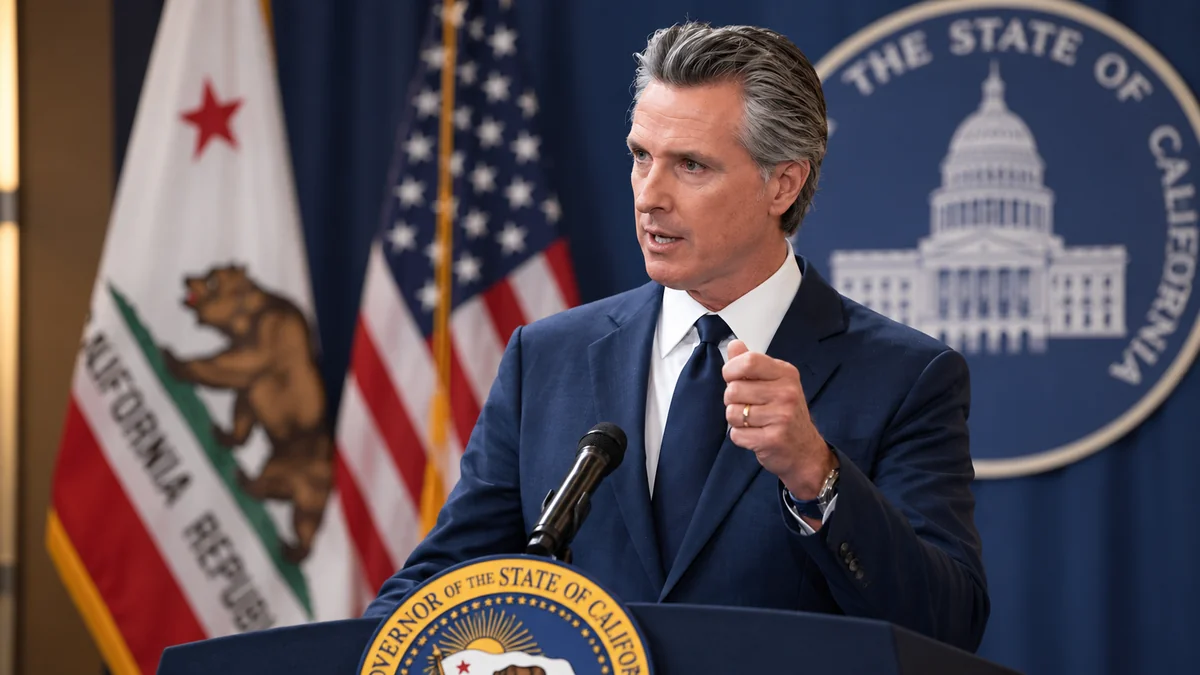
California has secured one of its tribal gaming relationships for another 35 years. Governor Gavin Newsom has signed Assembly Bill 2173, ratifying an amended compact with the Agua Caliente Band of Cahuilla Indians that now runs to 31 December 2061.
Key takeaways
- The amended tribal-state compact now runs through 31 December 2061
- The tribe may add up to 500 additional gaming devices
- Contributions to California's Revenue Sharing Trust Fund have been restructured
- AB 2173 cleared both legislative houses without opposition and took effect immediately as an urgency measure
- Agua Caliente employs around 3,200 people, making it one of the Coachella Valley's largest employers
What AB 2173 Actually Changes
A tribal-state gaming compact is the legal instrument that sets the ground rules for casino operations between a US state and a sovereign tribe. The amendment authored by Assemblymember Greg Wallis does three things at once: it stretches the agreement out to 2061, gives the tribe headroom to grow by up to 500 gaming devices, and reworks how much it pays into the state's Revenue Sharing Trust Fund, the pot that supports tribes with little or no gaming of their own.
The bill passed both houses of the California Legislature without a single vote against it. Because lawmakers adopted it as an urgency measure, it became law the moment Newsom signed rather than waiting for the usual effective date.
A Major Employer in the Coachella Valley
The Agua Caliente reservation stretches across sizeable parts of Palm Springs, Rancho Mirage and Cathedral City. Across its gaming and non-gaming businesses the tribe employs roughly 3,200 people, which places it among the biggest employers anywhere in the Coachella Valley — the practical reason a long compact horizon matters well beyond the casino floor.
"Agua Caliente has been a tremendous partner to the Coachella Valley for generations, working closely with our local governments and investing in the communities we call home."
— Greg Wallis, California Assemblymember
"This agreement respects tribal sovereignty, supports continued economic opportunity, and strengthens a partnership that has delivered real benefits throughout our region. I'm grateful to Governor Newsom for signing AB 2173 and to Chairman Jeff Grubbe and the tribe for their work to get this across the finish line."
— Greg Wallis, California Assemblymember
Meanwhile, the Cardroom Fight Continues
The smooth passage of the compact stands in sharp contrast to the other half of California's gambling landscape. Earlier this year the California Department of Justice brought in tighter rules for cardroom gaming, covering how hands are determined, banning terminology traditionally attached to 21-point games such as blackjack, and narrowing who is eligible to act as the player-dealer.
The response was litigation. The California Gaming Association and several operators filed two separate suits in San Francisco Superior Court, seeking injunctions to stop the regulations taking hold.
The contrast is instructive: tribal gaming in California just gained three and a half decades of certainty by unanimous consent, while the commercial cardroom sector is arguing its future in front of a judge.