A former Crown Resorts marketing boss has failed to convince a Hong Kong judge that she was personally owed interest on the AU$60 million a high roller burned through at Crown Perth over a handful of days in 2015. The credit, the court found, was never hers to lend.
Key takeaways
- The High Court of Hong Kong dismissed Chua Eh Fong's claim for 24% annual interest on Huang Youlong's gambling debt.
- The judge held the credit agreement ran between Huang and Macau junket operator Suncity Group, not Chua.
- Huang lost AU$40m in gaming chips within two days, then lost a further AU$20m chasing it.
- The full AU$60m was repaid directly to Suncity between February 2016 and November 2019.
- Chua was ordered to pay Huang's legal costs.
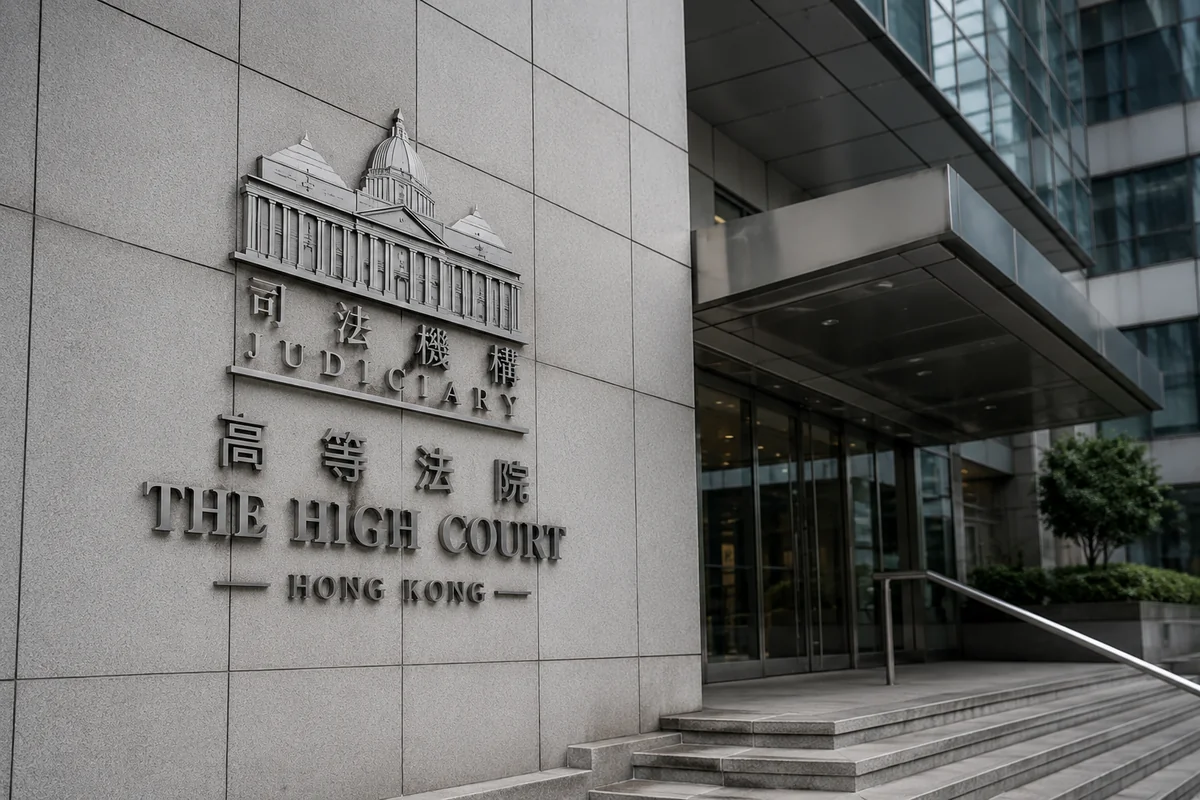
The High Court of Hong Kong has dismissed a lawsuit brought by a former Crown Resorts marketing executive who tried to recover interest on a AU$60 million gambling debt built up at Crown Perth more than a decade ago.
At the centre of the dispute was Chua Eh Fong, Crown's one-time vice president of marketing, who argued she was entitled to overdue interest at an annual rate of 24%. The court disagreed on a fundamental point: the credit arrangement, it found, sat between the gambler and Macau-based junket operator Suncity Group — Chua was never the creditor.
The ruling, handed down on 30 June in Hong Kong's Court of First Instance, found no evidence that the personal oral credit agreements Chua described had ever existed.
Two Days, AU$40 Million
The judgment opens a window onto the mechanics of a high-value junket deal struck at the height of the international VIP gambling boom. Huang Youlong — a Singaporean businessman and the former husband of Chinese actress Zhao Wei — flew to Perth in February 2015 to gamble at Crown's casino, the trip arranged through Chua.
Huang already had a high public profile: he married Zhao Wei in 2008, and in 2014 the couple spent close to HK$3.1 billion on shares of Alibaba Pictures, becoming its second-largest shareholder.
Crown itself would not extend Huang gaming credit. He already carried what the judgment describes as "substantial debts" to other casinos and junket operators. So the company pointed Chua toward Suncity, which proved willing to shoulder the risk.
The credit was underwritten by money that investors associated with the junket had deposited, and members of Chua's own family were among those investors.
Under that arrangement Huang picked up AU$40 million in gaming chips. He lost every one of them inside 48 hours.
"On 25 February 2015, [Huang] flew to Perth in order to gamble at the Casino using the gaming chips of AUD 40 million procured and/or arranged by [Chua] pursuant to the 1st Credit Agreement. It transpired that [Huang] soon lost all these gaming chips at the Casino within 2 days."
— From the judgment
Rather than walk away, Huang asked for more. Chua and Suncity's investors put together a second tranche of AU$20 million in chips on comparable repayment terms. That went the same way as the first.
What followed was a slow, untidy attempt to settle up. Huang handed over three cheques worth roughly AU$11 million as collateral, one of which bounced when Chua presented it. He also put down a HK$1.8 million deposit toward a Hong Kong property bought in Chua's name, but never managed to fund the balance.
"It Does Not Sit Comfortably With Basic Commercial Common Sense"
The litigation turned on a single question: had Chua personally contracted with Huang in a way that entitled her to charge interest? She said yes, pointing to verbal agreements covering both the AU$40 million line and the AU$20 million top-up. Huang said no — the money came from Suncity, and Suncity had been paid in full.
Deputy High Court Judge Alan Kwong sided with Huang, according to The West Australian, concluding that the creditor relationship ran to the junket operator and that no agreement existed making Huang personally indebted to Chua.
"It was inherently unlikely that Ms Fong (who was employed by Crown and who was responsible for arranging Mr Youlong to obtain gaming credit) would be treated as the principal who personally contracted with Mr Youlong for the provision of the gaming credit. In my view, it is artificial to suggest that Ms Fong would enter into contractual dealings with Mr Youlong on a personal basis. […] All in all, [Ms Fong's] case does not sit comfortably with basic commercial common sense and ordinary logic of events. I am not persuaded that it is credible."
— Deputy High Court Judge Alan Kwong
The judge further observed that Chua's interest claims surfaced only late in the dispute. She was ordered to pay Huang's legal costs.
A Portrait of How Junkets Actually Worked
Beyond the money, the ruling is a document of an era. It sets out plainly how junket financing operated at its peak: Suncity's investors supplied the capital that backed gaming credit, letting the junket guarantee chips for whales while taking a cut of the commissions their play generated.
In Macau, junket agents bring in wealthy players and lend them money to gamble, a business that emerged in the 1980s after Stanley Ho started handing private gaming rooms in his casinos to outside operators.
Court records show Huang settled the full AU$60 million directly with Suncity, in instalments running from February 2016 to November 2019. Suncity owner Alvin Chau intervened at one stage; once the money landed, the junket issued a deed of release confirming the debt was cleared.
Suncity's Rise and Fall
Founded by Chau, Suncity was for years Macau's largest junket operator and at times controlled close to half of the city's VIP gaming business. That dominance ended abruptly. On 28 November 2021, Chau was arrested in Macau on a warrant from the mainland city of Wenzhou over alleged illegal cross-border gambling and money laundering, and within a week Suncity had closed all of its Macau VIP rooms.
In January 2023 a Macau court convicted him of leading a criminal syndicate, illegal gambling and fraud, and sentenced him to 18 years in prison. With the junket gone, cases such as this Hong Kong dispute are among the few places where its credit practices are still set out in detail.
That history is why the case still resonates. Junket relationships became the central charge in the inquiries that engulfed Australia's casino sector, with regulators scrutinising Crown's dealings with operators like Suncity and finding money laundering exposure and governance failures. Crown severed its junket ties in 2020 as the scrutiny intensified, and the Perth property drew regulatory action after the Western Australian casino inquiry picked over its past conduct.
The findings came in stages. A New South Wales inquiry declared Crown unsuitable in February 2021, and Victoria's royal commission led to a special manager at Crown Melbourne and a ban on junkets. The Perth Casino Royal Commission's final report in March 2022 found Crown unsuitable to hold the Perth licence but gave it two years to return to suitability under an independent monitor. In July 2025, Western Australia's Gaming and Wagering Commission recommended that Crown Perth keep its licence after that remediation work. By then Crown had changed hands: Blackstone's A$8.9 billion takeover won Federal Court approval in June 2022.
The company is now owned by private investment firm Blackstone and has spent the years since rebuilding its compliance, anti-money laundering and harm-minimisation programmes in an ongoing effort to hold onto its Australian licences. The Hong Kong judgment is a reminder of the world those reforms were designed to leave behind.